Every ranch needs a Sunday dish. This is ours.
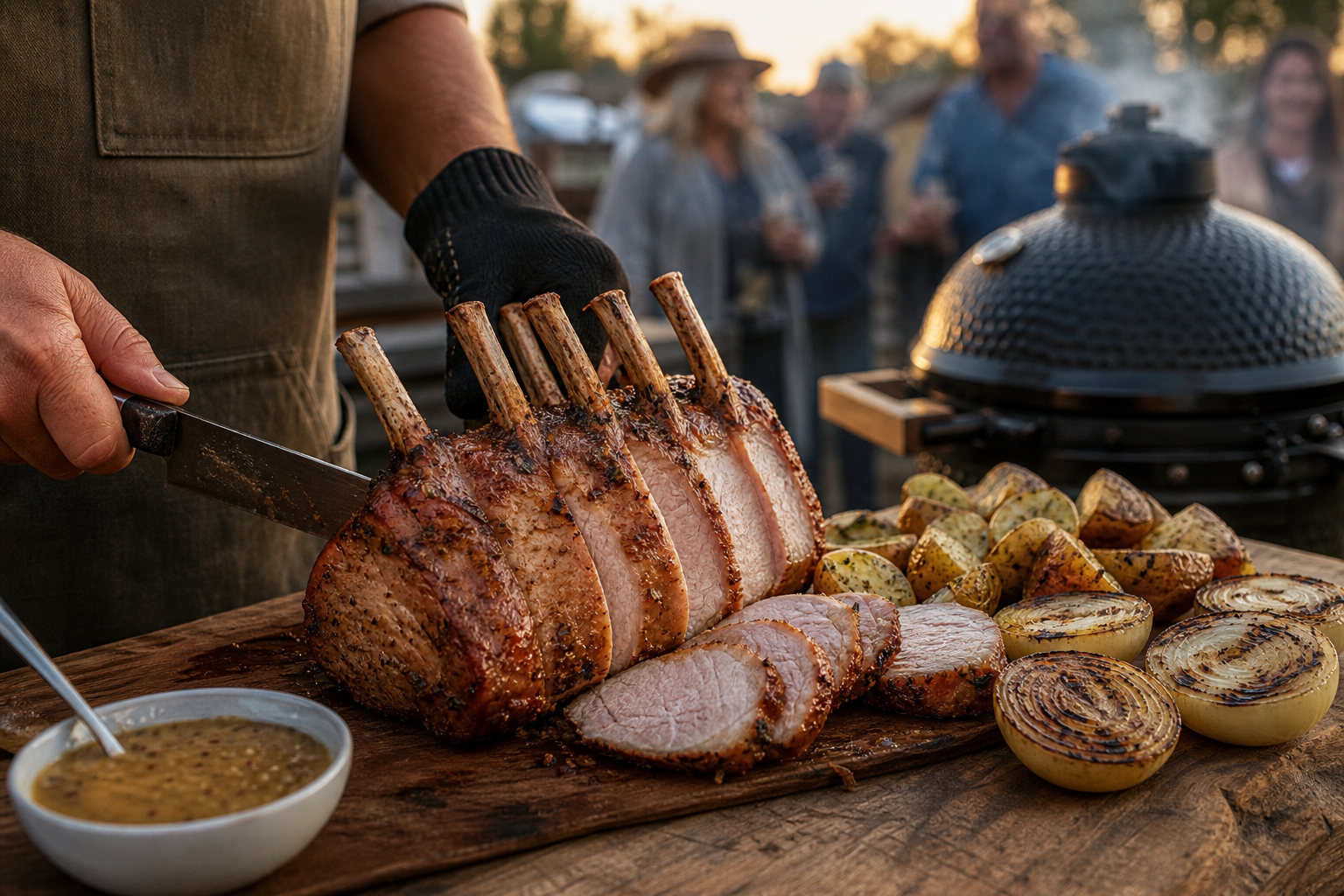
There is a moment that happens around a campfire or a long table after the sun drops behind the pasture. The work is done, the fire has been steady for hours, and someone walks out with a whole roast: golden-crusted, bones pointing up like a rack of trophies, steam rolling off the sliced edge.
That is what this is about. Not just a recipe. A moment.
At Two Boots Ranch, we do not just cook. We learn together. Fire, smoke, patience, and a knife. That is the workshop. And this Frenched bone-in pork loin roast is the kind of dish that turns a Sunday into something folks remember.
The Prep: Dry Brine
This starts the day before, and it is simple.
- 2 tbsp kosher salt
- 1 tbsp cracked black pepper
- 1 tbsp brown sugar
- 1 tbsp smoked paprika
- 1 tsp garlic powder
- 1 tsp dried rosemary, rubbed fine
- 1 tsp dried thyme
Pat the pork loin dry with paper towels. Rub that mix all over the meat, every side and every crevice, but keep the clean Frenched bones bare. That matters for the look later.
Set it on a wire rack over a tray, uncovered, in the fridge overnight. The salt works its way in. The surface dries out. That dry surface is what gives you a crust worth writing home about.
Take the roast out 45 to 60 minutes before it hits the kamado. Let it breathe.
The Fire: Kamado Setup
You want indirect heat for this one. Low and steady.
- Fill the charcoal basket with lump charcoal.
- Drop in 2 to 3 chunks of apple or cherry wood. Both are gentle on pork: enough smoke to know it is there, not enough to bully the meat.
- Place the heat deflector plates and a drip pan underneath.
- Aim for 120 to 130°C on the dome.
Let the kamado settle at that temperature for 15 to 20 minutes before the meat goes on. A stable fire is a patient cook's best friend.
The Cook: Slow Then Hot
Put the roast on the grate, bone-side down or standing upright if your rack allows. Insert a probe into the thickest part of the meat, without touching bone.
Let it ride at 120 to 130°C until the internal temperature hits 55°C. This takes roughly 1.5 to 2 hours for a 2.5 to 3 kg roast, but trust the probe, not the clock.
Somewhere in there, the smoke stops being new and starts smelling like home.
For the reverse sear, pull the roast off. Close the dome and open the vents wide. Let the kamado climb to 230 to 260°C.
When it is there, put the roast back on. Direct heat works if you want a stronger crust; keeping the deflectors in gives you a gentler sear. Watch it closely. Give it 8 to 12 minutes total, turning once, until the outside is dark and crackling.
Pull it at 58 to 60°C internal. Carryover heat will take it the rest of the way.
The Rest: Do Not Skip This
Set the roast on a cutting board. Tent it loosely with foil. Let it rest for 15 to 20 minutes.
This is the hardest part. Your kitchen or camp table will smell incredible. People will wander over asking if it is ready yet.
Tell them: almost. Good things wait.
If you cut too early, that beautiful juice runs onto the board instead of staying in the meat. Resting is not optional. It is the difference between good and table-slapping.
The Moment: Butcher-Style Serving
Now comes the show.
Set the roast on a big wooden board. The clean Frenched bones should be pointing up like handles. Grab one, slice down between the bones, and you have a chop with a natural bone handle.
Stand it up. Fan the chops out. Let people see the smoke, the golden crust, and the juicy center.
This is butcher-meets-rancher presentation. It is honest. It is beautiful. And it is the kind of thing that makes people pull out their phones before they pick up their forks.
The Sides: Straight From the Kamado
While the roast rests, use that leftover heat.
Kamado roasted potatoes: Halved baby potatoes, tossed in olive oil, salt, and rosemary. Roast at 200°C in a cast iron pan for 25 to 30 minutes. The smoke from the pork session gives them a ghost of something special.
Grilled onions: Thick slices of yellow or red onion, brushed with oil and a splash of balsamic. A few minutes per side on the hot grate. Charred, sweet, perfect.
Apple-mustard sauce: In a small saucepan, combine 1 cup apple cider, 2 tbsp whole-grain mustard, 1 tbsp honey, and a pinch of salt. Simmer until it thickens just a little. Bright and tangy enough to cut through the richness.
From Recipe to Workshop
That is the beauty of this dish. It is not only the pork loin. It is the full day around it: lighting the fire, seasoning the meat, tending the smoke, judging the sear, waiting through the rest, carving between the bones, and bringing a real centerpiece to the table.
A good food workshop is not a lecture. It is hands on. You feel the heat, smell the wood, learn why patience matters, and understand why the final cut is just as important as the first pinch of salt.
That is what makes this roast a proper Two Boots Ranch dish: fire, smoke, a little showmanship, and a table full of people waiting for the first slice.
Happy trails, and save a bone for me.
Cassidy Sterling